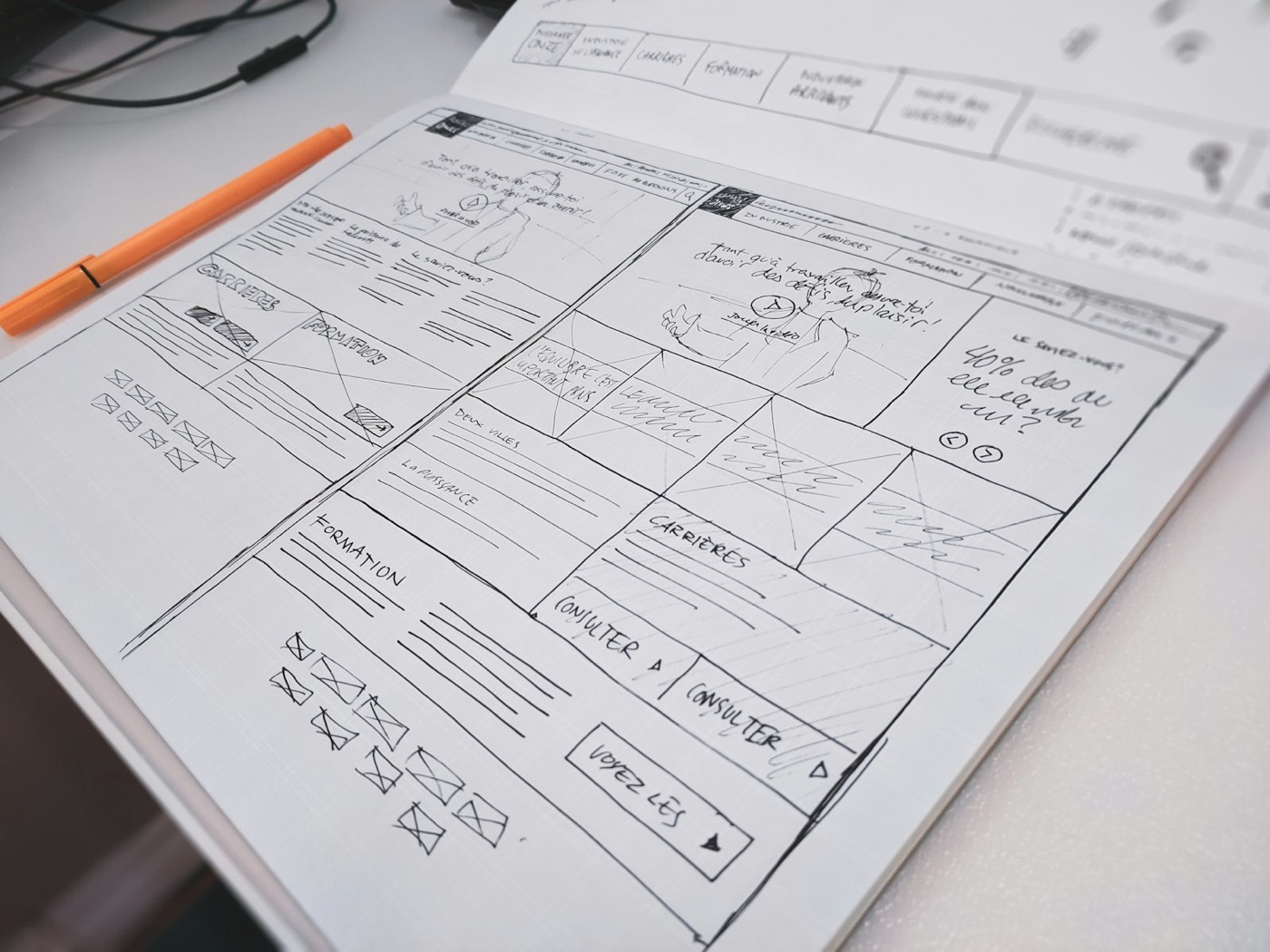
A proof of concept tests whether an idea is technically possible. A prototype tests whether the experience works, usually without real code. An MVP is a real, launchable product with the smallest feature set that delivers value. Founders raising capital or acquiring users almost always need an MVP, not a prototype or PoC.
The three, defined
Each answers a different question, for a different audience, with a different output.
| Proof of Concept | Prototype | MVP | |
|---|---|---|---|
| Answers | "Can this be built?" | "Does the experience work?" | "Will people use and pay for it?" |
| Audience | Your engineering team | You, testers, early users | Real users & investors |
| Output | A technical spike, often throwaway | Clickable designs, no real backend | A live, working product |
| Use when | There's genuine technical risk | You need to validate UX before building | You're ready to launch and learn from real usage |
Which one do you actually need?
A quick way to decide, by situation:
- You've raised, or you're raising on traction. You need an MVP. Investors and early users want something real to react to — not a slide deck or a clickable mockup.
- You're unsure the experience resonates. Start with a prototype. It's the fastest way to put a realistic flow in front of users before committing to a full build.
- Your idea depends on unproven technology — a novel algorithm, a hardware integration, a data source nobody's tapped. Do a PoC first to retire that risk, then move to the MVP.
For most founders we work with, the honest answer is: you need an MVP, and you're tempted by a prototype because it's cheaper and faster. That temptation is exactly the trap.
The expensive mistake: confusing a prototype for an MVP
The most common — and costly — error is shipping a prototype and calling it an MVP. A prototype looks like a product in a demo, but it has no real backend, no data persistence, no production quality. The moment real users touch it, it breaks, and the credibility you were trying to build evaporates.
A prototype is for learning. An MVP is for launching. If you put a prototype in front of investors or paying users expecting it to perform like a product, you've spent real money answering a question you weren't actually asking.
How we scope the right one
In our first conversation, we work out which question you're actually trying to answer — feasibility, experience, or market — and recommend the smallest artifact that answers it honestly. Sometimes that's a two-week design sprint; usually, for founders, it's a scoped MVP built to launch. Either way, you get a written recommendation and a fixed price before anything is built, so you're never paying to answer the wrong question.